
Ever been frustrated, staring at your Google Maps listing, wondering why your neighbors seem to leap ahead in local visibility while you’re stuck in the shadows? I remember those days vividly. My first attempt to boost my map ranking felt like shouting into the void—no matter what I tried, the results didn’t budge. It was a lightbulb moment when I realized I was approaching the problem all wrong. Instead of throwing random tactics at the wall, I needed a strategy rooted in proven SEO principles tailored specifically for local maps.
Why Your Map Ranking Matters More Than Ever
In the crowded world of local business, visibility on Google Maps can make or break your success. When potential customers search for your service nearby, your position on the map determines whether they find you or your competitors. According to a survey by BrightLocal, 78% of local mobile searches result in an offline purchase, making your map ranking critically important (source). Yet, many businesses overlook the importance of strategic optimization, assuming basic profile completion is enough. I did too, early on, and paid the price in lost opportunities.
The truth is, boosting your map rank isn’t about shortcuts or quick hacks. It’s about understanding how Google evaluates relevance, distance, and prominence, and then applying targeted strategies to influence these factors. In this post, I’ll share my personal journey from confusion to clarity and walk you through effective techniques that transformed my local visibility.
Are you frustrated because despite your efforts, your business isn’t showing up where it should? Don’t worry—you are not alone, and better yet, there are actionable steps you can take today. Ready to turn the tide? Let’s dive into the core strategies that can help you elevate your Google Maps rankings and attract more local customers.
Claim and Optimize Your Google Business Profile
Your journey begins with a fully optimized profile. Ensure every detail is accurate—name, address, phone number, hours, and categories. Use local keywords naturally in your business description to signal relevance, much like tagging a post effectively. Add high-quality images that showcase your offerings, as visual cues boost engagement. I once updated my profile with better photos and descriptive keywords, leading to a noticeable rise in local searches within two weeks. This foundational step is crucial before moving on to other tactics.
Build Consistent Local Citations
Think of citations as digital word-of-mouth—mentions of your business across the web. Ensure your NAP (Name, Address, Phone Number) information is consistent everywhere—from online directories to your website footer. Use services like map SEO boost techniques to audit and update inconsistent mentions. In my experience, inconsistent citations caused my rank to fluctuate, but correcting them stabilized and improved my position. Focused citation consistency signals credibility to Google, helping your map rank grow stronger.
Gather and Manage Customer Reviews Effectively
Reviews serve as social proof and influence your prominence. Encourage satisfied customers to leave genuine reviews, then respond promptly and professionally. I set up a simple workflow: after service, I sent a personalized request for a review, which increased my review volume significantly. Responding to reviews shows engagement and builds trust, enhancing local relevance. Remember, honest reviews are better than fake ones, and Google values authentic customer feedback highly.
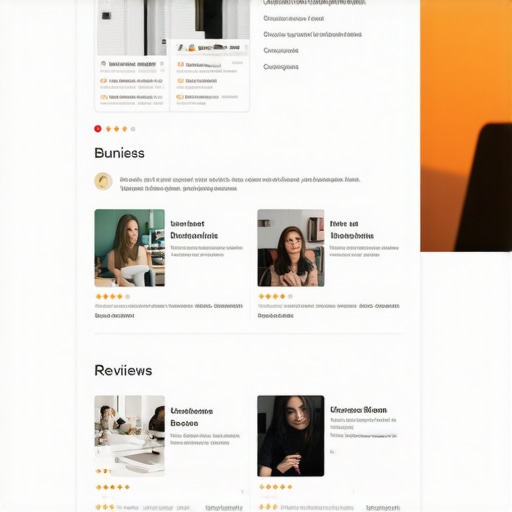
Visual example of engaging with customer reviews on a Google Business Profile, including response tips.
Create Local Content That Matters
Publish blog posts, events, or updates that resonate with your local audience. Use location-specific keywords naturally within your content—like mentioning your neighborhood or landmarks. For instance, I wrote about local events and participated in community forums, which attracted local backlinks and increased my relevance signal. Consistent, valuable content positions you as a local authority and nudges your map ranking upward.
Engage in Local Link Building
Think of backlinks as votes of confidence. Reach out to local blogs, news outlets, or partner businesses for link exchanges or mentions. I collaborated with a neighboring business for a co-promotional event; they linked to my site, and subsequently, my local rankings improved. Focus on earning backlinks from reputable local sources to boost your prominence—Google interprets these signals as trustworthiness and relevance.
Monitor and Adjust Your Strategy
Use tools like Google Search Console and map SEO techniques to track your rankings and traffic. Regularly review your insights to identify what’s working and what’s not. I found that adjusting keywords based on performance data helped me target more effective search terms, accelerating my rank improvement. Stay agile, test different tactics, and refine your approach continuously.
Many local businesses believe that simply optimizing their Google Business Profile (GBP) and accumulating reviews is enough to climb the map rankings. However, this common belief overlooks critical nuances. In my experience, most people underestimate how Google evaluates relevance and authority, often over-relying on surface-level tactics. The reality is, true map rank lift depends on a delicate balance of multiple signals—some of which are often overlooked or misunderstood. For example, one prevalent myth is that link building or citation consistency alone guarantees a higher rank. While these are essential, they are just parts of a bigger puzzle. Google’s top-ranking factors include user engagement, schema markup, and behavioral signals that go beyond blatant SEO.
Let me highlight a crucial pitfall: focusing solely on keyword stuffing or aggressive reviews can backfire. Google penalizes manipulative tactics, and surges in fake reviews or keyword spam can harm your credibility long-term. Instead, genuine local relevance combined with authoritative signals creates sustained, upward map movement.
What Advanced Factors Are Really Moving the Needle?
For experienced practitioners, understanding the significance of behavioral metrics like click-through rates, visit duration, and direction requests is vital. These signals inform Google about your profile’s relevance relative to user intent. Interestingly, Google’s algorithms are increasingly incorporating machine learning models that assess these nuanced behaviors, as noted by industry expert Darren Shaw. This means that overlaying your optimization efforts with a focus on user experience—like fast website load times, local content, and mobile usability—can exponentially boost your Maps rankings.
Furthermore, neglecting custom schema markup for local businesses can lead to missed opportunities. Structured data helps Google understand your business details more precisely, which amplifies your local relevance. Implementing schema isn’t just technical fluff; it has a real impact on visibility in local packs. Do not fall for the trap of thinking that traditional SEO signals alone are enough; the interplay of behavioral and technical signals makes the difference.
Finally, avoid the misconception that rankings are static—Google updates its algorithms frequently, and staying ahead requires continuous optimization. Regularly monitoring your position using tools like map SEO techniques helps you adapt swiftly. The context here is crucial: what worked yesterday might not work tomorrow. Embracing the complexity and staying vigilant is your best strategy for long-term success.
Have you ever fallen into this trap? Let me know in the comments.Once you’ve established a solid foundation for your Google Maps ranking, the next challenge is maintaining that momentum over time. To do this effectively, leveraging the right tools and adopting proven methodologies is essential. I personally rely on a combination of analytics platforms and systematic routines to ensure my local SEO efforts stay on track. As I’ve experienced, consistent monitoring allows me to identify dips early and adjust my strategies proactively.
One tool I find indispensable is “Whitespark’s Local Citation Finder”. This software helps me audit my existing citations, spot inconsistencies, and discover new opportunities for local backlinks. Regular citation management prevents ranking fluctuations caused by inconsistent business info across directories. Additionally, I use “BrightLocal” for review tracking; monitoring customer feedback enables me to respond promptly, strengthening my reputation and relevance.
Automation plays a significant role in maintaining long-term results. I set up scheduled audits to track my GBP performance, review volume, and keyword rankings. Tools like “Moz Local” streamline citation updates, ensuring my business info remains accurate across platforms. These processes are vital because even minor discrepancies can negatively influence local search visibility over time.
Looking ahead, trends suggest that Google will continue integrating behavioral signals like dwell time and click-through rates into its ranking algorithms. This means creating engaging, relevant content for your local audience will be increasingly important. Optimizing your site’s user experience—fast load times, mobile responsiveness, and local schema markup—will be critical for sustained success.
— How do I keep my Map rank stable amidst evolving algorithms? Regularly review your data through these tools, adapt your local content strategy, and ensure citation consistency. My advice? Start with testing automation via Moz Local to keep your citations pristine. For detailed strategies, consider exploring our cornerstone content on mastering map SEO boost techniques—it’s a roadmap for lasting success. Plus, check out the latest insights in the industry by visiting this in-depth guide for future-proofing your rankings.
The Biggest Mistake I Wish I Avoided Earlier
Early in my journey, I underestimated the power of continuous engagement beyond just optimizing my profile. I thought a well-optimized GBP was enough, but I learned the hard way that local visibility demands ongoing effort. Regularly updating content, responding to reviews, and monitoring local signals created a sustained boost that static optimization couldn’t achieve. Real Map rank lift came when I integrated these practices into my routine—something I wish I embraced from the start.
Tools That Help Me Stay Ahead in Map SEO
My secret weapons include Map SEO techniques for keeping my local presence sharp, as well as Whitespark’s Local Citation Finder for citation consistency. These tools provide clarity and actionable insights, ensuring my strategies are data-driven. Over time, they’ve been instrumental in maintaining my top rankings even as algorithm changes rolled out.
Learning to Keep Calm and Adapt
One lesson I cherish is the importance of agility. Google’s algorithms evolve rapidly, and tactics that worked last year might not suffice today. Staying informed through industry updates, participating in community forums, and practicing flexibility has empowered me to adjust my approach swiftly. This adaptability has become my best ally in ensuring my Google Maps success endures amidst the shifting sands of local SEO.
How Are You Preparing for Long-Term Map Success?
The path to sustained Google Maps prominence isn’t a one-time effort but an ongoing commitment. By investing in consistent engagement, leveraging the right tools, and staying adaptable, you can build a resilient local presence. Remember, the true advantage lies in the habits you cultivate today for results that last tomorrow. If you’re ready to elevate your Map rankings continuously, start integrating these practices into your routine now.
Reading this comprehensive guide really resonated with my own experiences in local SEO. I agree wholeheartedly that a well-rounded strategy, rather than quick hacks, is essential for sustained success on Google Maps. One thing I’ve noticed is how adding local schema markup significantly improves visibility, especially in competitive areas where every little technical edge counts. I’ve also started focusing more on behavioral metrics like click-through rate and dwell time, which seem to be gaining influence in rankings according to industry updates. I’m curious, how do others balance creating valuable local content without it feeling forced or overly promotional? In my case, sharing community stories has helped build credibility and relevance organically. Would love to hear some ideas for integrating local content naturally while still keeping it optimized for map rankings.